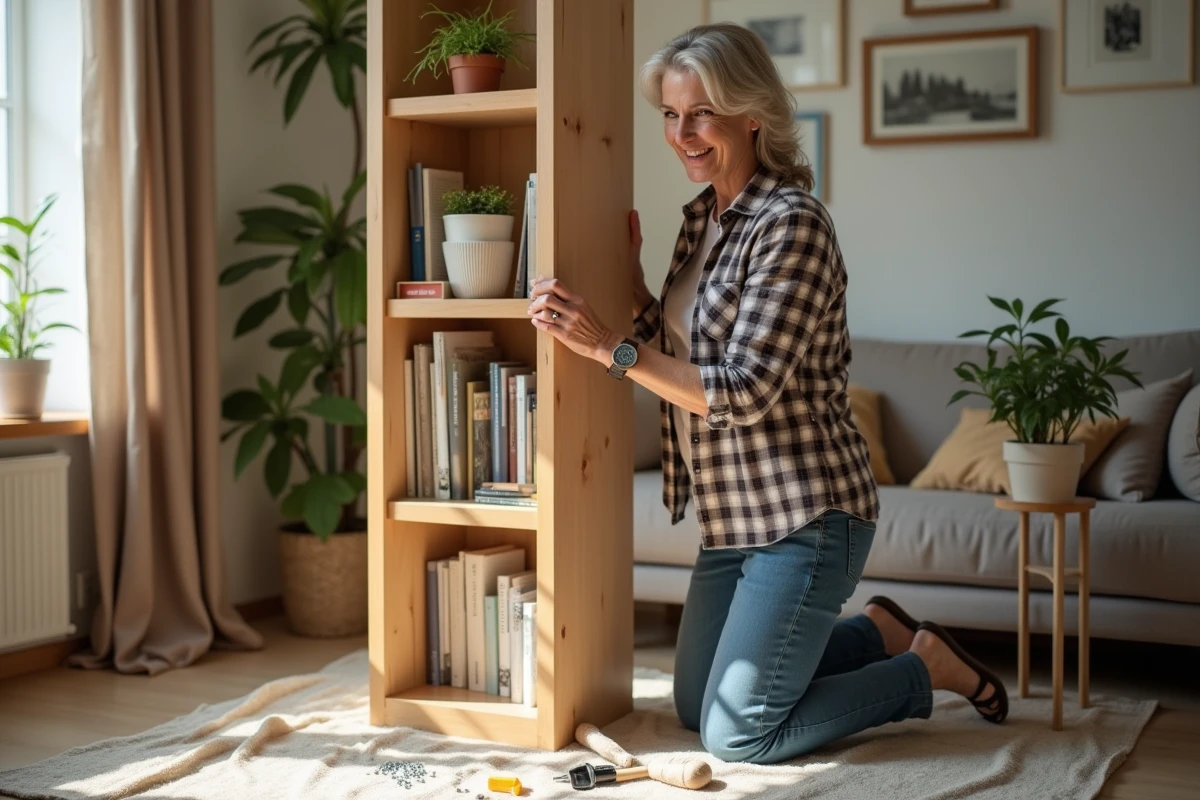
The success of a home project doesn’t rely on a collection of tools or mastery of complex techniques, but often on the ability to adapt a simple solution to an unexpected problem. A classic rule recommends always following the instructions to the letter, while some surprising results come from a clever diversion or improvisation.
In DIY, inventiveness often counts more than the level of experience. The best tricks emerge after a mistake, a constraint, or thanks to that famous improvised discussion over drinks where a friend suggests, “what if you tried this?”. Here, observation, resourcefulness, and sharing take the lead.
Why home DIY is increasingly appealing: inspirations and tangible benefits
Embracing home DIY is about reclaiming your space. Creating something yourself means rejecting the uniformity of disposable new items, giving a second life to objects, and adding sparkle to everyday life through personalization. DIY has gone beyond being just a “trend”: it fulfills the desire to create, repair, and repurpose. Regardless of skill level, anyone can explore the realm of possibilities and place independence at the heart of home routines.
DIY nurtures imagination, fosters community, and creates connections. Starting projects together means sharing, passing on knowledge, and having a good time. Family projects are stories to tell, to show, and to pass down from one generation to the next. DIY knows no boundaries: whether living in a large garden or a city studio, there is always a suitable idea, sometimes with very little, often with reclaimed materials, accessible to all budgets thanks to upcycling.
The ecological aspect also weighs heavily in the balance. Repurposing objects, transforming leftover wood, giving a new purpose to a jar or a pallet… it’s about taking action, not just consuming differently. The tips found on https://www.cecilebricole.fr/ prove this: creativity, savings, and an eco-responsible approach go hand in hand.
DIY at home is more than a hobby or a simple way to decorate. Some find it a stress-reliever, others see it as an opportunity to improve and acquire new skills, without fear of learning from both failures and successes. Each creation, even imperfect, opens up new skills to explore elsewhere.
How to choose DIY projects that suit your desires and level?
Before pulling everything out, ask yourself: what do you want to transform, experiment with, or improve? DIY is full of options, from simple decorative items to more elaborate furniture construction. Start with your concrete desires: tidying up a corner of a room, brightening up a wall, keeping the kids occupied on Wednesdays? Your goal should guide the choice of DIY project, along with your current experience.
The key is to adapt the project to your knowledge and materials. If you’re just discovering DIY, it’s better to start with easy and quick items: making an original photo frame, pouring a natural candle, crafting a storage box, or weaving a wall hanging. Learning consists of small steps that reassure and motivate. Children, for their part, enjoy making paper flowers or organizing crayons and markers in handmade storage; with a visual step-by-step guide and simple explanations, everything becomes possible.
To get off on the right foot, prioritize certain materials and tools based on your desires:
- Wood, fabric, cardboard, and glass are easy to work with due to their accessibility and versatility.
- The tools vary according to the project’s difficulty: scissors and glue for decoration, hammer or drill for sturdier assemblies.
The detailed step-by-step approach available online builds confidence and structures progress. From room to room—kitchen, bathroom, balcony, terrace—there are no shortage of DIY ideas, and there is always new inspiration to match every curiosity. Creativity can be found everywhere. You gain confidence, assert your style, and see the results evolve under your hands.

Practical tips and creative ideas to successfully tackle your first DIY projects without stress
To maximize your chances of success, keep these reflexes in mind: prepare your space, gather your tools, organize your materials. Give yourself time to get comfortable with each action, progress gradually, and make it a habit to double-check your measurements. There’s no rush: a careful cut, a precise glueing, and your project starts to take shape. Mistakes are part of the game; they often become the starting point for a renewed idea.
Reusing transforms everything: a glass jar with a candle, a pallet turned into a shelf, a worn t-shirt converted into a cushion cover. Focusing on upcycling gives character to your decor and helps control your budget. Tailor each creation to the needs of the room, the family, and your own style, and you’ll see how each creation takes on a special meaning.
Here are some concrete tips for progressing without getting discouraged:
- Multiply techniques: gluing, weaving, personalizing… each attempt feeds your boldness.
- Start with small projects to gain confidence.
- Allow the unexpected to enter the experience: an imperfection today may turn into a discovery tomorrow.
Share the joy with children: a crepe paper flower, a cardboard organizer, or a frame to decorate quickly become shared memories. The manual gesture brings people closer, liberates, and entertains. Test, adapt, dare, and savor the satisfaction of a project that reflects you and sometimes surprises even its creator. You never know where the next idea will lead: on a corner of the table, a Sunday afternoon, or around a repurposed object that just needs to extend its life.
Creative Ideas and Practical Tips to Succeed in All Your DIY Projects at Home