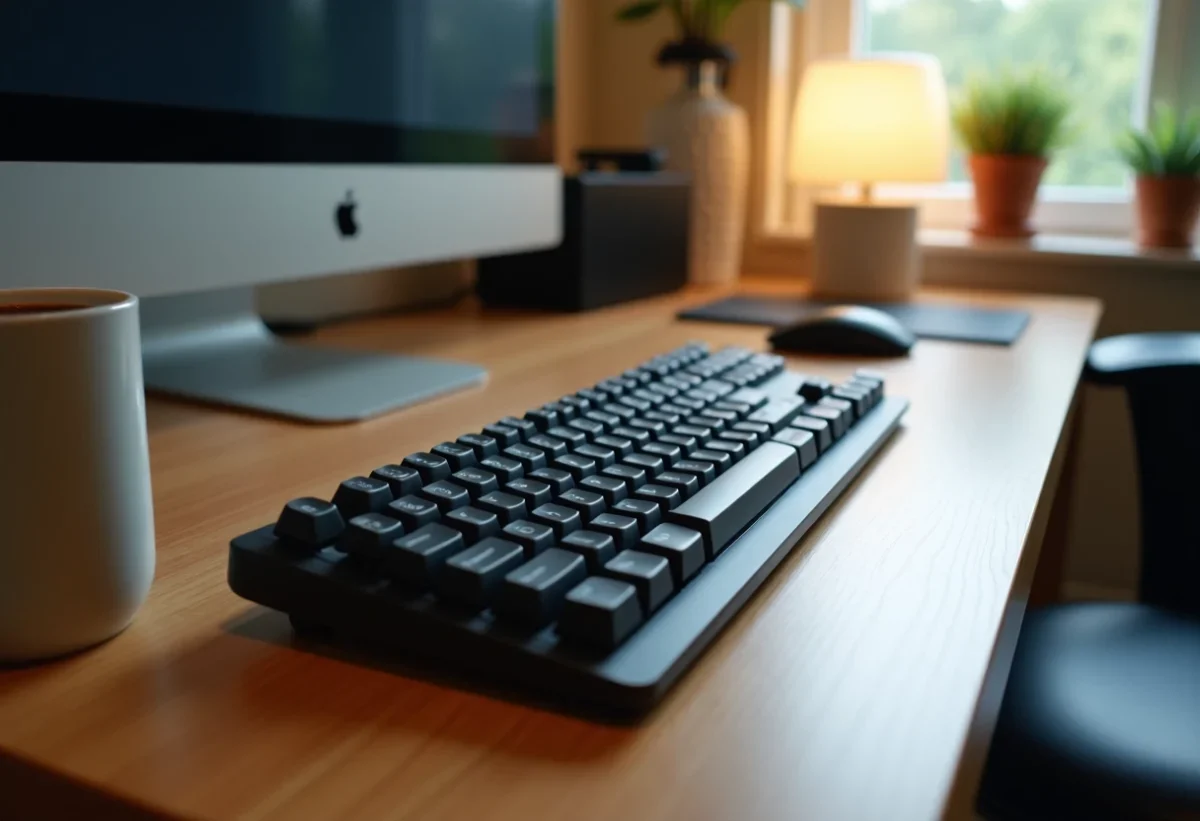
By working long hours on a computer, it becomes essential to know a few tips to improve productivity and reduce fatigue. A well-mastered keyboard can transform a tedious task into a smooth and enjoyable experience.
To start, it is useful to familiarize yourself with keyboard shortcuts that save time. For example, the combination Ctrl + C to copy and Ctrl + V to paste is indispensable. Customizing function keys for quick access to frequently used applications can also make a big difference.
Adopting a good posture and using a wrist rest can prevent pain and musculoskeletal disorders. By integrating these simple habits, keyboard use becomes not only more efficient but also more ergonomic.
Essential Keyboard Shortcuts for Effective Use
To optimize your computer usage, mastering keyboard shortcuts is essential. These key combinations allow you to perform actions quickly, without resorting to the mouse.
Basic Shortcuts
- Ctrl + C: copy
- Ctrl + V: paste
- Ctrl + X: cut
- Ctrl + Z: undo
These basic commands facilitate the management of the Windows clipboard, an essential component for temporarily storing copied or cut data. The Shift key combined with another key allows for quick text selection.
Navigation Shortcuts
Navigating in Windows becomes simple with the following shortcuts:
- Win + E: open File Explorer
- Win + D: show desktop
- Alt + Tab: switch between open windows
These shortcuts allow quick access to applications and files, avoiding repetitive clicks.
Accessibility Options
The accessibility options in Windows offer valuable features. Sticky Keys, for example, allow you to use keyboard shortcuts by pressing one key at a time, without needing to press them simultaneously. The Magnifier function allows you to zoom in on the screen, while the on-screen keyboard displays a keyboard for input.
Managing Notifications
For effective notification management:
- Win + A: open the notification center
- Win + I: open settings
These shortcuts keep you informed of system alerts without interrupting your work. 
Techniques and Tools to Improve Your Typing Speed
To master typing, knowing the basics is not enough. Using a suitable keyboard and practicing regularly are major steps. AZERTY, QWERTY, and BEPO keyboards each have specific advantages, but keyboard ergonomics remain paramount.
Choosing the Right Keyboard
An ergonomic keyboard reduces muscle strain and improves posture. Here are some options:
- AZERTY Keyboard: primarily used in France and Belgium, it is adapted to the specifics of the French language.
- QWERTY Keyboard: used in English-speaking countries, it is often preferred for work in English.
- BEPO Keyboard: specifically designed for the French language, it optimizes key layout for more efficient typing.
Practicing Regularly
To improve your typing speed, regular exercises are essential. Use typing software that offers progressive lessons and speed tests. These tools allow you to measure your progress and identify areas for improvement.
Using Tactile Feedback
Mechanical keyboards provide tactile feedback that can increase typing accuracy and speed. Tactile feedback allows you to feel the pressure of each key, thus reducing typing errors. Mechanical keyboards are particularly favored by typing professionals.
Also consider using Windows voice recognition to diversify your input methods. This feature allows you to dictate text and control certain commands, offering an effective alternative to traditional typing.
Adopting these techniques and tools will significantly improve your typing speed and enable you to work more efficiently.