
Hanspeter and Siglinde Sinner have never run a hotel or managed a family business in the conventional sense. Their daily life has revolved around the Talschlusshütte refuge in Sesto, in the Dolomites, where the father worked as a chef and the mother as a waitress. This professional reality, rarely described accurately in French-speaking media, sheds light on how the Sinner family navigates the sudden fame of Jannik, who has become the world number one.
Mountain refuge and pressure management: what the Sinner parents’ profession reveals
Confusion is common: several articles describe Jannik Sinner’s parents as “restaurateurs” or “hoteliers.” The distinction matters. Working as employees in an alpine refuge involves very different constraints than those of a business owner. The hours are dictated by altitude, season, and the influx of hikers. The financial leeway remains that of an employee, not an entrepreneur.
This modest professional background has created a particular relationship with money and fame. When Jannik left the family home as a teenager to join Riccardo Piatti’s academy, the decision represented a considerable investment for a couple of refuge employees. The collaboration with Piatti required a financial commitment that the family undertook without an entrepreneurial safety net.
To better understand the origins of Hanspeter and Siglinde Sinner, it is essential to place their journey in the context of South Tyrol, where seasonal work at altitude still shapes the lives of many families.
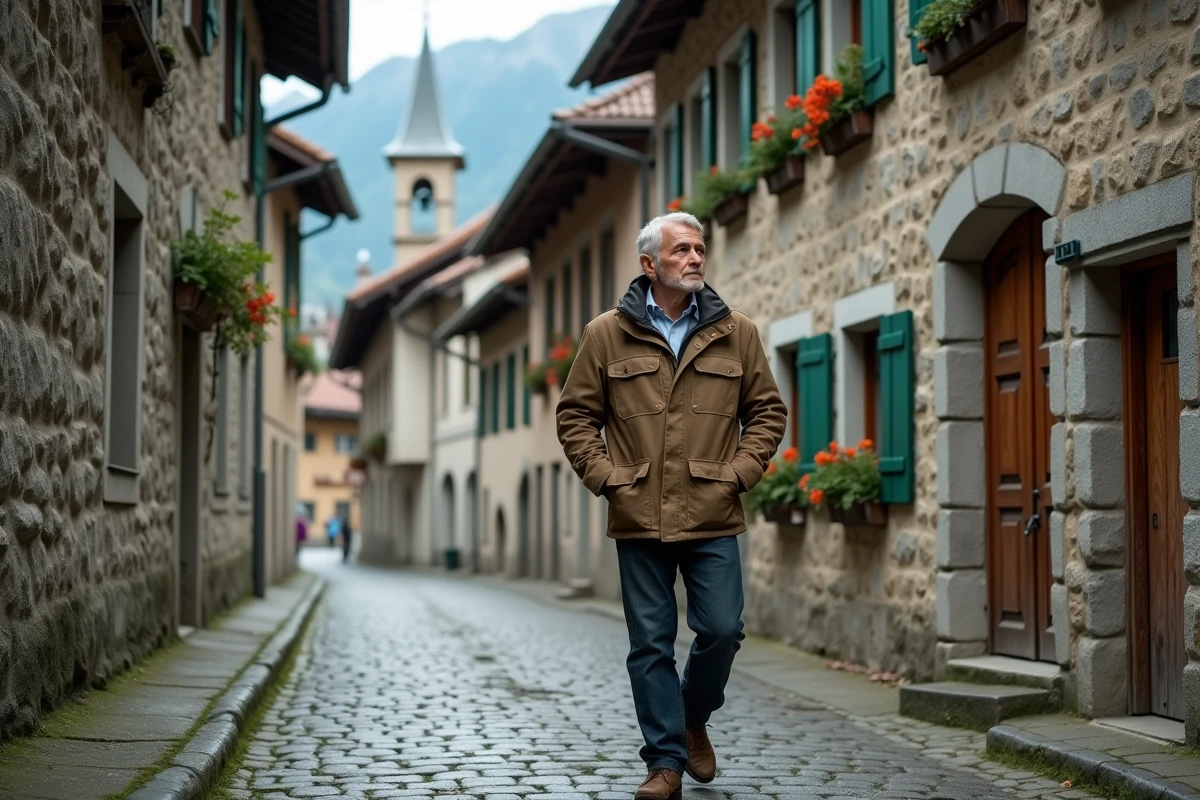
South Tyrol: German-speaking identity of an Italian family
Jannik Sinner was born in San Candido (Innichen in German), a German-speaking municipality belonging to Italy. This geographical fact is not trivial. South Tyrol operates as an autonomous region where Germanic culture dominates daily life, from school to commercial exchanges.
| Element | Sinner Family | Typical ATP Circuit Family |
|---|---|---|
| Mother tongue | German (South Tyrol) | Variable, often a single national language |
| Parents’ profession | Chef and waitress in a refuge | Often executives, former athletes, or entrepreneurs |
| Media exposure | Almost none before 2024 | Frequent from the player’s first titles |
| Son’s first sport | Alpine skiing | Tennis from childhood in most cases |
| Leaving home | Adolescence, to join Piatti | Variable, sometimes from childhood |
The table highlights an atypical family profile on the circuit. Most top players grew up in tennis-oriented environments from a very young age. Jannik Sinner initially practiced alpine skiing before switching to tennis, a path consistent with the geography of Sesto, an alpine village in the Dolomites.
Multilingualism and cultural discretion
Hanspeter and Siglinde speak German daily. Jannik is fluent in German, Italian, and English, a skill directly related to his education in this border area. This linguistic proficiency allows him to communicate with the international press without intermediaries, which remains uncommon among Italian players.
The discretion of the parents also aligns with a regional cultural trait. In South Tyrol, public exposure is not socially valued. Hanspeter and Siglinde did not grant any in-depth interviews to the media before Jannik reached the top of the world rankings.
Post-2024 fame: the Sinner parents facing the spotlight
Jannik’s rise to champion status has changed the game. Since his first Grand Slam titles, the parents have been photographed at major finals, sometimes alongside Italian authorities and the player’s partner. This recent public visibility contrasts with previous years.
Several elements distinguish how the family manages this transition:
- No public social media accounts for Hanspeter or Siglinde, whereas the parents of many champions regularly engage their own online audience
- No personal advertising contracts or structured media appearances from the parents
- Presence at tournaments limited to finals and decisive moments, without ongoing circuit follow-up
This behavior reflects the environment in which the couple has always operated. Serving meals to hikers in a mountain refuge does not prepare one for managing a public image. However, the regularity and physical endurance required by this seasonal job have evidently imparted to Jannik a capacity to withstand intense work rhythms.
Skiing, tennis, and family transmission: Jannik Sinner’s sports journey
Before holding a racket, Jannik practiced alpine skiing at a competitive level. This sport remains dominant in the valleys around Sesto. The transition to tennis occurred gradually, without family rupture or a parental project oriented towards professionalism.
The decision to leave the family home to join Piatti marked a turning point. For a teenager raised in a small alpine village of a few thousand inhabitants, joining a tennis academy in northern Italy implied a radical change of environment.
What stands out in the Sinner parents’ journey is the absence of any pre-established media or financial strategy. Hanspeter and Siglinde did not construct a career plan for their son. They accompanied a trajectory that unfolded far from them, from a mountain refuge where the tourist season still dictates their year.
The Sinner family illustrates a model rarely represented in global tennis: working-class parents, German-speaking, with no prior connection to professional sports, whose son has become a champion. This gap between the family’s origins and the level reached by Jannik remains one of the most striking aspects of his journey.