McDonald’s Halal in France stems from a clever fusion of Western culinary heritage and key Islamic precepts. This innovative concept, respectful of the legal and ethical requirements of Halal, is shaking up the restaurant industry. Halal certification, guaranteeing ritual slaughter, becomes an imperative necessity, highlighting the complexity of adhering to religious ethics while meeting legal standards. McDonald’s Halal has undeniably influenced the French culinary landscape, injecting a new dynamic into gastronomy. Future perspectives reveal challenges and progress for McDonald’s Halal in France, involving logistical adjustments, culinary innovations, and increased awareness of Halal values.
The Origin and Concept of McDonald’s Halal
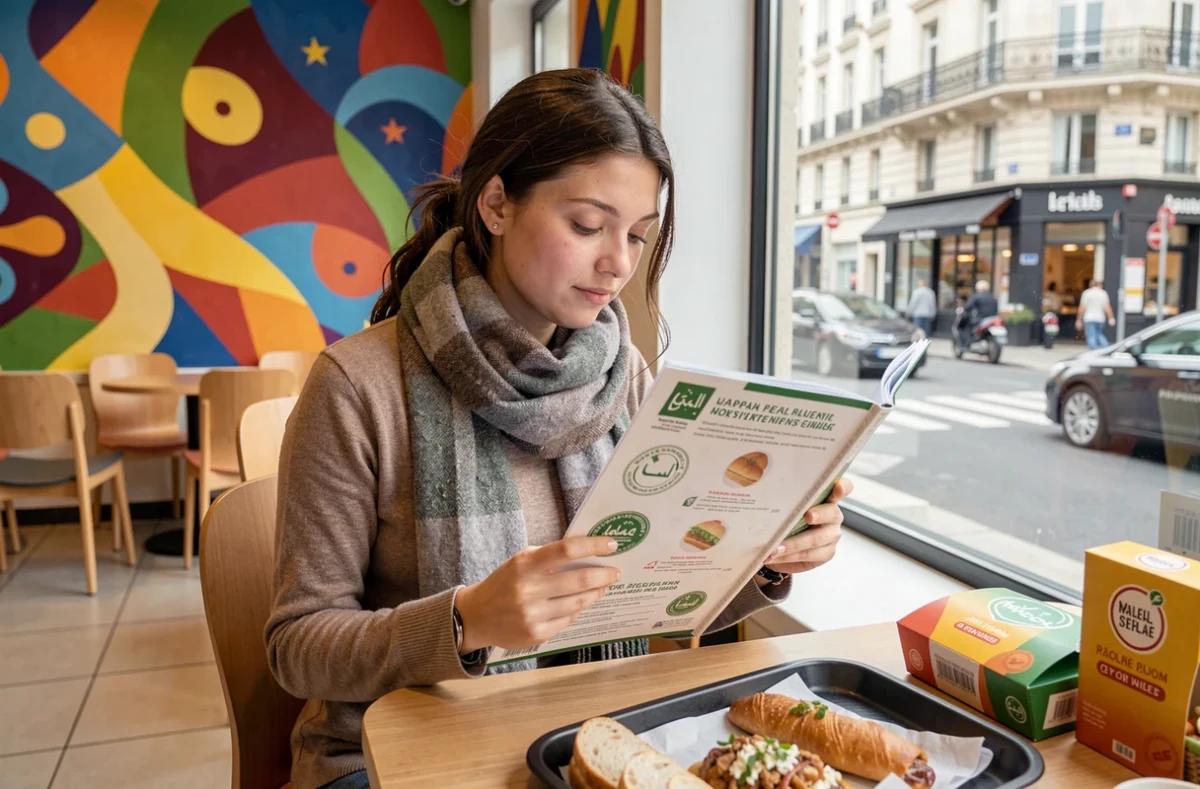
In the fast-food world, the American chain McDonald’s is known for its ability to adapt to different international markets. Its strategy is none other than to offer products that meet the specific customs and dietary habits of each region. It is in this context that the idea of McDonald’s Halal was born, a bold initiative aimed at attracting Muslim consumers who strictly follow Islamic dietary prescriptions.
The main idea behind this project is simple: to offer a range of products in accordance with strict halal rules regarding the slaughter of animals, their processing, and any related food preparation processes. The intention is clearly to include a significant segment of the global population that was previously excluded due to religious restrictions.
However, this innovation has raised some controversy around a “controversial certification”. The relevant religious authorities are supposed to verify all processes involved to confirm that they are indeed compliant with halal. But some groups have expressed doubts about the completeness and authenticity of these checks at McDonald’s Halal.
The controversial certification raises several important questions regarding not only the legitimacy of the “Halal” label awarded by McDonald’s but also its real commitment to scrupulously respecting Islamic dietary and overall ethical standards.
The Legal and Ethical Implications of Halal in the Restaurant Industry
Halal catering faces several challenges and dilemmas, ranging from legal regulations to ethical questions. The rise of the halal market has led to an increase in services related to this sector, particularly in the restaurant field. However, this rapid growth is not without raising certain issues.
Legally, the requirements to comply with the “halal” status vary greatly from country to country. The required certification is often costly and complex to obtain, which can be a barrier for small businesses looking to enter this promising market. Another major difficulty lies in the absence of a universal standard precisely defining which products can be classified as halal or not. This undoubtedly leads to confusion among Muslim consumers who sometimes struggle to clearly identify whether a restaurant truly respects their religious values.
From an ethical standpoint, it should be noted that every food served in a restaurant must meet the main criteria of halal: having been slaughtered according to the Islamic rite (the animal must be alive and conscious when killed); containing no traces of alcohol or pork; coming from animals that have been properly fed (without artificial hormones), treated with compassion and respect throughout their lives.
The Influence of McDonald’s Halal on the French Culinary Landscape
The arrival of McDonald’s Halal has shaken the foundations of French gastronomy, a country globally recognized for its love of refined dishes and culinary pride. Many have found this intriguing, as fast food is often perceived as antagonistic to the traditional image of French cuisine focused on the excellence of fresh ingredients, the time dedicated to preparation, and delicate flavors.
France is home to a significant Muslim community that strictly observes the main dietary prohibitions of Islam. The introduction of McDonald’s Halal means that these individuals can now enjoy their Big Mac without fear of violating their religious convictions. This is a clear indication that this major American chain is adapting to the diverse needs of its French customers by offering a certified halal menu.
However, some see this innovation as a potential threat to the local gastronomic scene. Fast food is generally synonymous with quick and inexpensive meals, which contrasts with the French culinary ethic where every bite is meant to be savored slowly and fully appreciated. Thus, there are concerns that the growing influence of McDonald’s Halal could gradually erode the original French food culture.
Unsurprisingly, this new phenomenon has fueled the debate between purist traditionalists and those willing to embrace change.
Future Perspectives: Progress and Challenges for McDonald’s Halal in France
The question of halal food at McDonald’s in France continues to attract attention. To understand the situation, one must consider the large number of Muslims in France who adhere to Islamic dietary rules, creating a strong demand for halal options in fast-food restaurants. As a result, several competing chains have already integrated halal offerings into their menus.
However, McDonald’s, with its global power and surprising footprint in France—after all, we are the company’s second largest market after the United States—has not yet taken this step. But what if it did? What if there were a future where McDonald’s offered 100% certified Halal burgers to French consumers?
The business opportunity is undeniable. The halal market represents nearly 5 billion euros per year just in France and has proven resilient even during economically difficult times. There is immense potential for McDonald’s to expand its audience and revenue simply by introducing certain variations on their existing products.
But the future of McDonald’s Halal faces several serious obstacles. One of the main challenges lies in logistics. Providing strictly separated meat without risk of cross-contamination would be a major challenge for the brand, present throughout both its supply chain and during restaurant service.