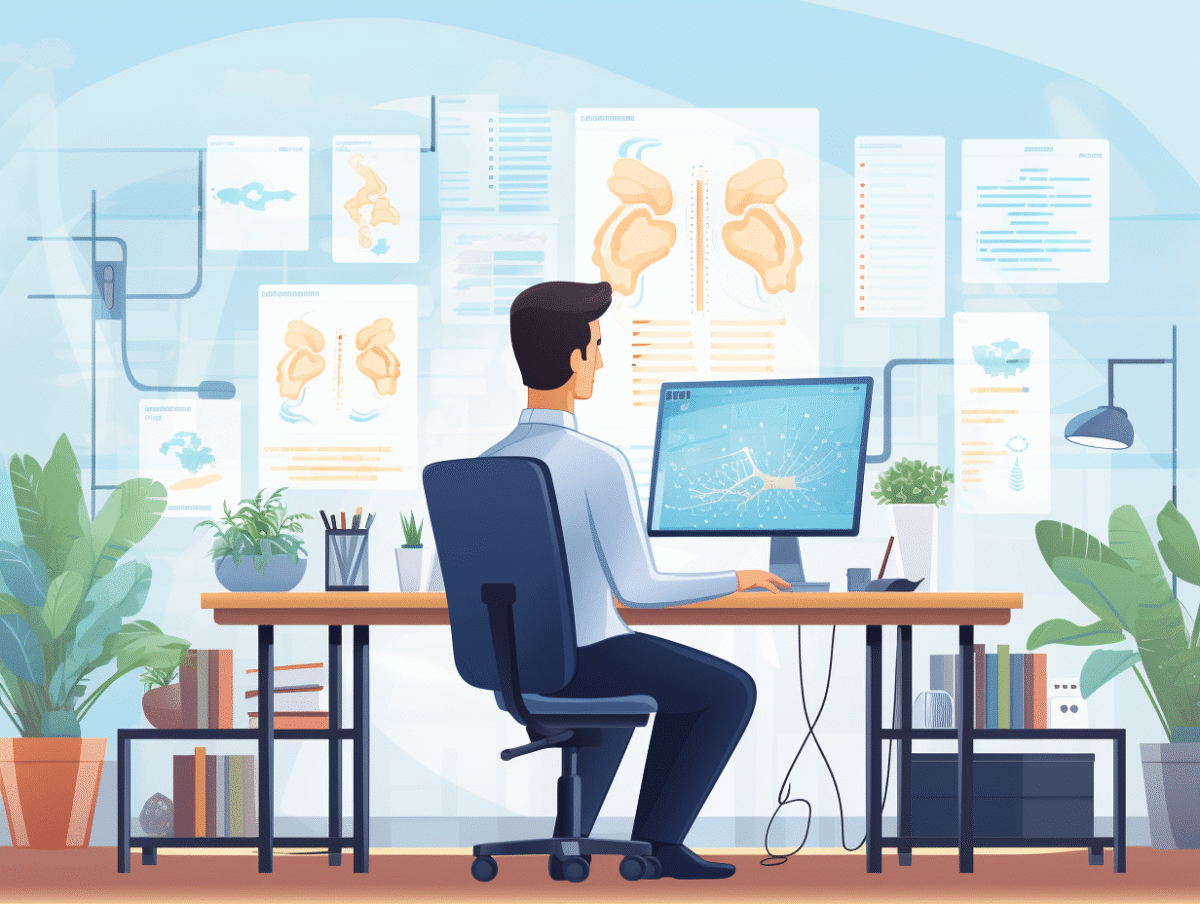
Discopathy, a degenerative condition of the intervertebral discs, has significant repercussions on individuals’ professional lives. It manifests as chronic pain and reduced mobility, which can considerably hinder work performance, especially in physically demanding jobs. Employees suffering from discopathy may face major challenges, ranging from the need for ergonomic adjustments to the obligation to reconsider their professional future. This condition raises the question of workplace prevention and support for affected workers to maintain their quality of life and professional integration.
Impact of discopathy on professional life
Discopathy, deterioration of the intervertebral discs, is responsible for a multitude of disruptive symptoms for workers. Lower back pain, the primary manifestation of this condition, poses major obstacles in the performance of many professions, particularly those requiring sustained physical activity. Vibrations, often present in industrial environments, exacerbate pain in the lumbar vertebrae, further worsening the condition of already weakened discs. Compression and repeated mechanical stress on these essential structures, the discs, lead to accelerated deterioration, resulting in frequent absences from work and decreased productivity.
L5-S1 discopathy and disability recognition is a reality for patients whose work capacity is significantly reduced. Faced with persistent back pain and debilitating symptoms such as inflammation, stiffness, or tingling, the question of continuing professional activity becomes pressing. The musculoskeletal disorders caused by discopathy can lead to forced career changes or even early retirement.
Healthcare professionals are often called upon to assist these patients in managing their condition on a daily basis. Multidisciplinary care is crucial to mitigate the impact of discopathy on professional life. This may include medication, physiotherapy sessions, and sometimes, when symptoms require it, surgical intervention. The goal is to restore function and reduce pain to allow for a better quality of life at work.
Discopathy, with its deleterious effect on the intervertebral discs and its array of debilitating symptoms, emerges as a central concern for occupational health. Adequate management and professional support for affected individuals are essential to enable them to maintain suitable professional activity and preserve their social integration.
Adaptation and prevention strategies in the workplace
In the whirlwind of professional activities, prevention stands as an essential line of defense against discopathy. Companies are committed to promoting safe work practices, particularly by encouraging the adoption of good postures and reducing activities involving vibrations or heavy lifting. Educating employees about handling techniques and the use of ergonomic equipment helps minimize the risk of spinal injuries. Prevention also involves encouraging regular physical activity, thus avoiding overweight and strengthening the musculoskeletal system.
Concurrently, the therapeutic approach cannot be overlooked. Symptomatic treatments, such as anti-inflammatory medications or corticosteroid injections, play a pivotal role in pain management. Physiotherapy is established as a cornerstone in the rehabilitation process, helping to improve mobility and strengthen the muscles supporting the spine. In cases where these measures prove insufficient, resorting to surgery, although more invasive, may become essential to restore spinal function.
Alternative medicines are also gaining attention for their potential in relieving discopathy. Anti-inflammatory plants, such as Devil’s Claw or blackcurrant buds, are gaining credibility for their ability to reduce inflammation without the side effects sometimes associated with chemical treatments. Similarly, a diet incorporating alkaline foods could help decrease inflammatory pain by promoting optimal acid-base balance.
These combined adaptation and prevention strategies form a diverse arsenal to combat the repercussions of discopathy in the workplace. Doctors, surgeons, and healthcare professionals at large are mobilizing to provide ongoing support to patients, enabling them to navigate their professional environment more effectively. Collaboration between various health stakeholders and the business world is crucial to implement tailored solutions for each case, thus ensuring the preservation of workers’ spinal health.