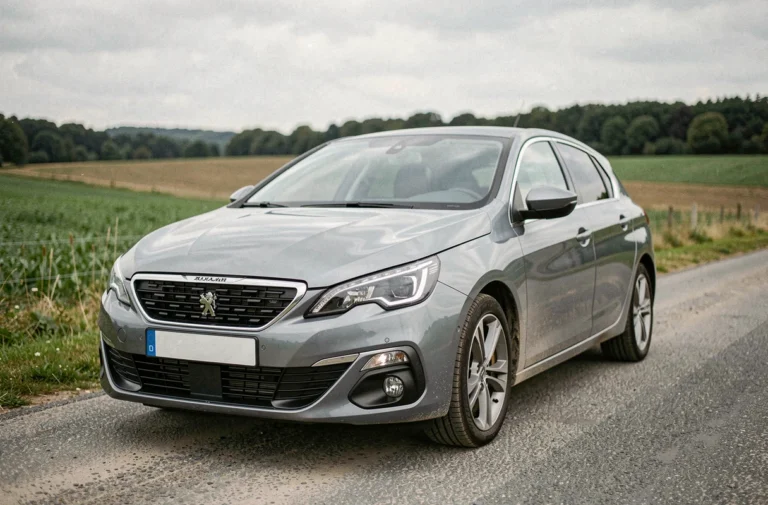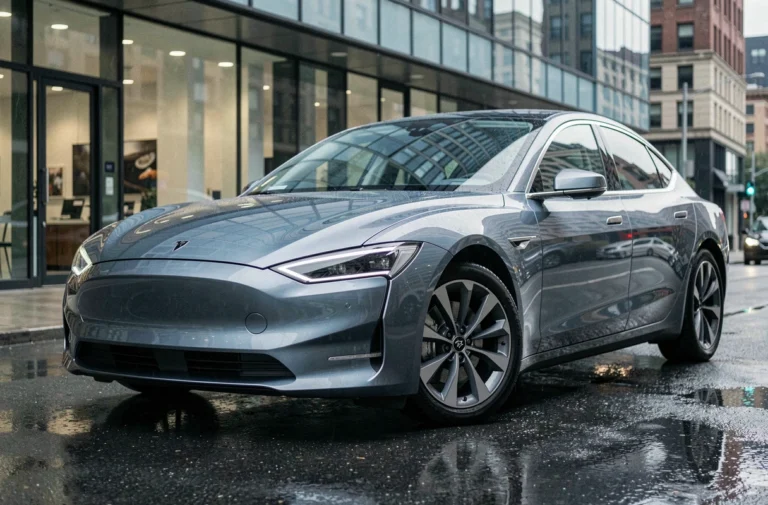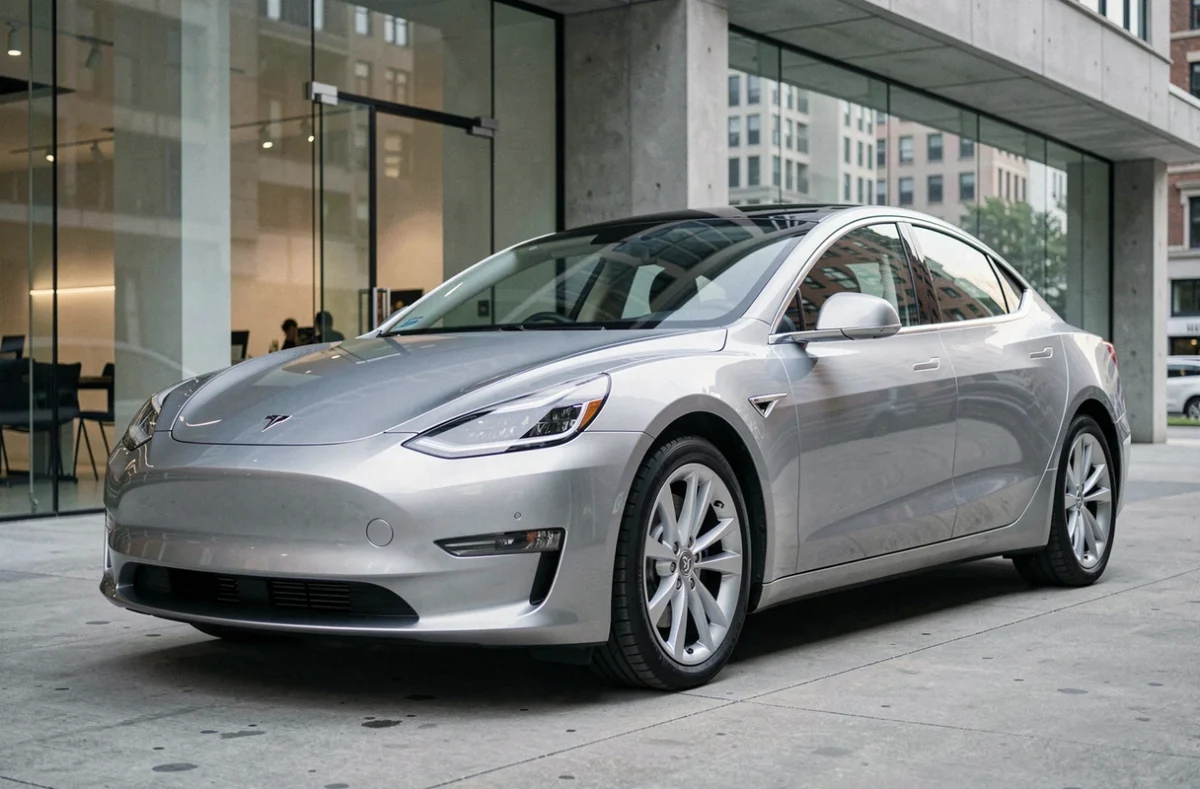
Your car warns you of an emergency braking event before you’ve even spotted the obstacle. It updates overnight, like a phone. And in a few months, it could send electricity back to the grid when you don’t need it. These three scenarios illustrate changes already underway in the automotive industry.
Software-defined vehicles: how cars evolve after purchase
Beyond batteries and autonomous driving, the concept of the software-defined vehicle is fundamentally changing the relationship between drivers and their vehicles.
The idea is simple. Rather than locking in a car’s features when it leaves the factory, manufacturers are now designing electronic architectures that can receive updates remotely. A security patch, an improvement to regenerative braking or a new navigation feature can be downloaded without a trip to the dealership.
In practical terms, this changes a model’s useful life. A car bought in 2026 could be running significantly improved software two years later. To keep up with these developments month by month, Citizens News’ automotive news regularly covers software update announcements from major manufacturers.
This shift also raises new questions. Who is responsible if an update worsens a vehicle’s handling? How do you resell a vehicle when some features require a subscription? Software is becoming a purchasing factor on a par with the powertrain.
Bidirectional charging: electric vehicles as a source of energy
You’ve probably heard about the growing range of electric cars. But a less widely discussed feature deserves attention: bidirectional charging, often called V2G (vehicle-to-grid) or V2H (vehicle-to-home).
The principle is simple: your vehicle no longer just consumes electricity. It can also feed power back, either to your home during an outage or to the grid at peak times. An electric car battery stores enough energy to power a household for several hours.
The UK is actively working to encourage this approach. The goal is twofold: to smooth demand on the grid and offer electric vehicle owners a financial benefit. In France, trials are multiplying, although the regulatory framework is still taking shape.
What this means for buyers
- The total cost of ownership falls if the vehicle earns money by feeding electricity back to the grid during off-peak hours
- Choosing a home charger becomes a strategic decision: not all chargers support bidirectional charging
- Battery capacity directly affects the system’s financial value, not just the vehicle’s driving range
For households with solar panels, combining home energy generation with storage in the car is beginning to form a coherent ecosystem.
Digital battery passports: traceability and the used-car market
The European Union is preparing a measure that will fundamentally change the used electric vehicle market. The digital battery passport (or Digital Product Passport) will require every vehicle battery to have a unique identifier linked to a complete history.
Why does this matter? Buying a used electric vehicle today means taking a gamble on the actual condition of its battery. The available data is often incomplete. The digital passport will change that by making information about material origins, charge cycles, remaining capacity and any repairs accessible.
Practical implications for the automotive industry
For automakers, this means integrating sensors and tracking systems from the manufacturing stage. For buyers, transparency about battery condition will become a negotiating factor, just like mileage is for a combustion-engine vehicle.
The rollout will be gradual. The first categories of industrial batteries will be covered before automotive traction batteries. This European regulation could also curb the export of used electric vehicles to countries without recycling facilities, an issue raised by the United Nations Environment Programme.
Electric mobility beyond cars: two-wheelers and commercial vehicles
Automotive news naturally focuses on passenger cars. Yet the shift to electric power is also affecting other segments, sometimes even more rapidly.
UNEP reports that electric two-wheeler sales grew faster in 2025 than the two-wheeler market as a whole. In densely populated urban areas, an electric scooter addresses parking and cost constraints that even a compact city car cannot solve.
Commercial vehicle offerings are also taking shape quickly. Models such as the Fiat E-Doblò are being offered at competitive prices to speed up adoption among businesses. Electrifying commercial fleets reduces operating costs on the short, repetitive routes typical of urban deliveries.
- Electric two-wheelers are capturing a growing share of everyday urban mobility
- Electric commercial vehicles have lower maintenance costs than comparable diesel models
- Charging station coverage remains a barrier in some areas, including in Europe
These segments broaden the very definition of automotive trends. The industry is no longer limited to sedans and SUVs: the transformation affects the entire mobility chain.
Charging infrastructure: the link that determines everything else
None of the trends above can take hold without a reliable charging network. This is the weakness most often cited by motorists who are hesitant to switch to electric.
In several emerging markets, the number of electric vehicles per public charging point is rising, a sign that infrastructure deployment is not keeping pace with sales. The situation in Europe is better, but uneven. Coverage along French motorways has improved, while rural areas remain underserved.
Network quality matters as much as network density. A broken charger or one with limited power can be just as discouraging as no charger at all. Operators are working on predictive maintenance and interoperability between networks to make the experience more reliable.
The stakes go beyond convenience. Without robust infrastructure, bidirectional charging, battery passports and widespread adoption of electric vehicles will remain technical promises. It is on this front—less eye-catching than announcements of new models—that the transformation of the automotive world is really taking place.