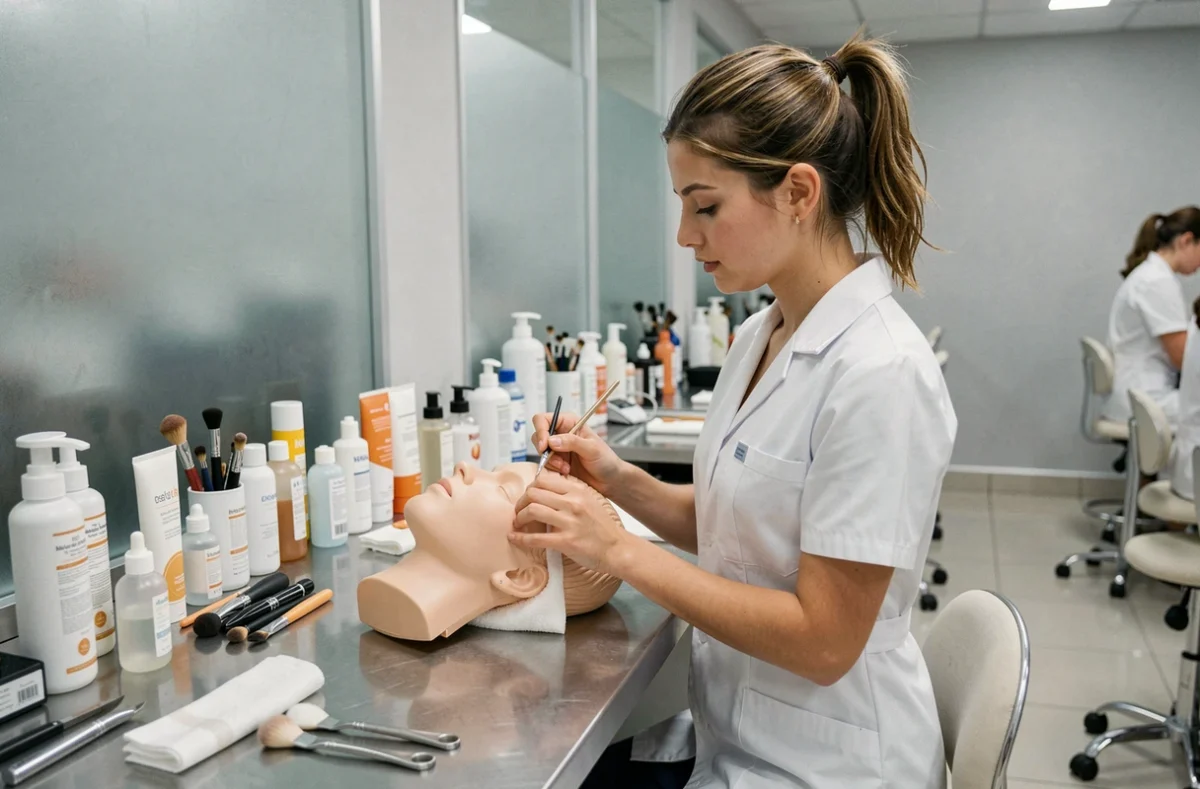
A beauty therapy course leads to a state-recognised qualification that authorises graduates to provide facial and body treatments, hair removal and make-up services in a beauty salon. Choosing the right course determines the services you can offer, your professional status and your career prospects. Several qualifications are available, from the CAP to the BTS, each covering a different scope of skills.
CAP beauty therapy curriculum: what has changed recently
The CAP Esthétique, Cosmétique, Parfumerie remains the basic qualification required to work in the field. It takes two years to complete after Year 10, or one year for those who already hold another qualification. It can also be taken as an independent candidate.
The CAP curriculum was updated in 2025. The exam format and the content of the practical assessments have changed. Before comparing two schools, ask specifically which curriculum they follow and how the practical exams are conducted. A course based on the previous curriculum could cause problems on exam day.
The CAP covers standard beauty treatments, the sale of cosmetic products and customer relations. Courses offered by institut-bote.fr help students develop these skills in a structured setting, with practical support aligned with the current curriculum.
One point that is often overlooked: the CAP alone does not qualify you to offer every specialised treatment. Techniques involving devices for aesthetic purposes (including certain lasers and intense pulsed light) require additional certification. Check whether the course you are considering includes these modules or whether you will need to pay for them separately.
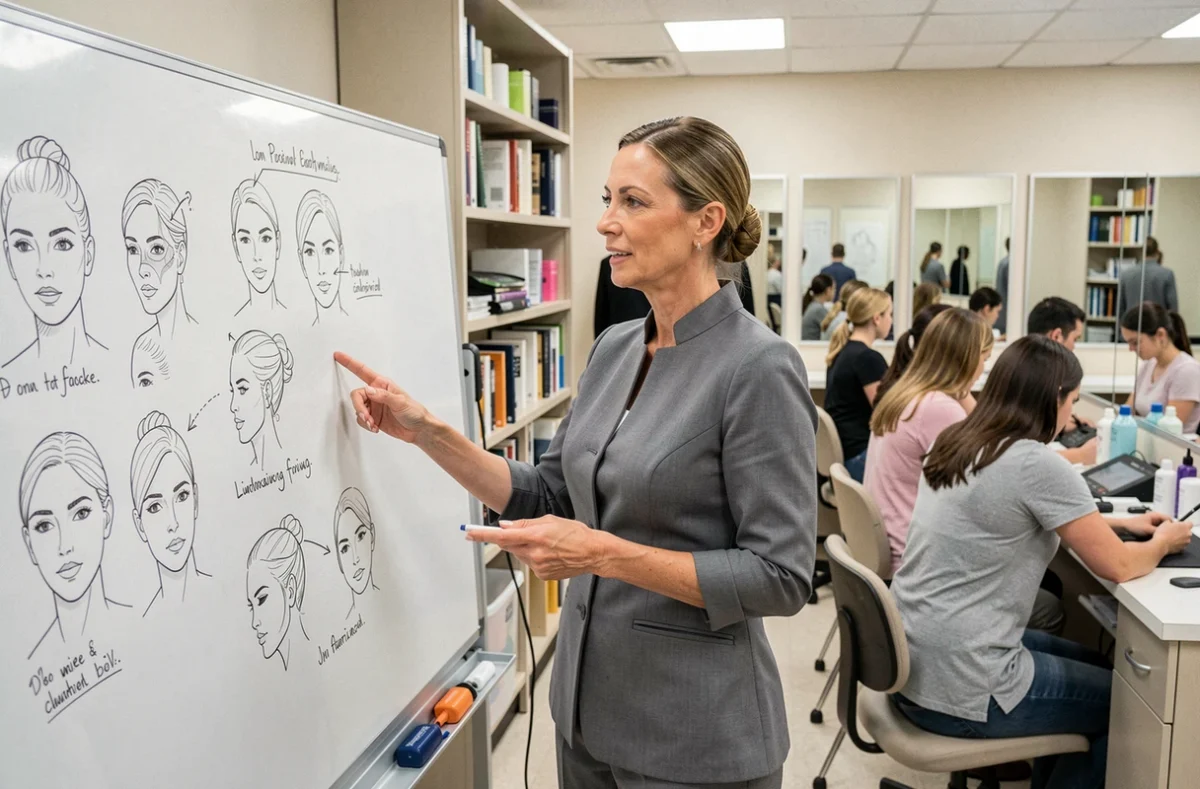
Qualifications after the CAP: BP, Bac Pro or BTS in cosmetics
The CAP opens the door to employment, but three further qualifications can broaden your scope of work and lead to positions of responsibility.
Brevet Professionnel Esthétique
The BP Esthétique takes two years after the CAP and is usually completed through an apprenticeship. It develops skills in body treatments, salon management and team leadership. It is the qualification required to open your own beauty salon as a craft business owner.
Bac Professionnel Esthétique
The Bac Pro is aimed primarily at students leaving Year 10 who want a three-year course combining general education with technical training. It prepares students both for entering the workforce and for continuing on to a BTS.
BTS Métiers de l’Esthétique-Cosmétique-Parfumerie
This two-year course, taken after the baccalauréat, prepares students for management, training or technical sales roles in the cosmetics industry. There are three options: management, brand training and cosmetology. This qualification opens up career paths beyond the beauty salon, including roles in laboratories, cosmetics brands and specialist retail.
Distance learning or beauty school: compare the amount of practical training
The growing number of distance-learning courses makes choosing a programme more challenging. An online course can provide effective preparation for the CAP theory exams (cosmetology, biology and sales). However, it cannot replace supervised practical training.
The CAP curriculum includes practical exams in which candidates perform treatments on a live model in conditions similar to those in a beauty salon. A purely theoretical course leaves students with a gap in their practical skills that is difficult to make up on their own.
Before choosing a training provider, compare these practical details:
- The number of supervised practice hours with live models (not just mannequins)
- The length and location of mandatory placements in a beauty salon or spa
- Whether the course can be completed through an apprenticeship, ensuring regular workplace experience
- The provider’s published exam pass rates, which can be verified with the local education authority
The amount of supervised practical training is what sets a solid course apart from inadequate preparation. The same qualification title does not guarantee equivalent course content.

VAE in beauty therapy: get your skills recognised without completing a full course
The Validation des Acquis de l’Expérience (VAE) allows people already working in the field to obtain the CAP without completing the entire course. Candidates put together a portfolio demonstrating their mastery of the curriculum’s required skills, then present it to an assessment panel.
This route is open to professionals who have worked in a beauty salon, spa or hair salon, even if they do not hold a formal qualification. It is also suitable for career changers who have built up significant hands-on experience.
Partial validation may be granted if a candidate’s experience does not cover all three main CAP areas (beauty techniques, sales and advice, and applied sciences). In that case, candidates have a set period to complete the missing areas through targeted training. Compare the cost and duration of this top-up with those of an accelerated one-year CAP course.
How to choose a beauty school: look beyond the brochure
Beauty schools tend to make similar marketing claims. A few checks can help you distinguish reputable providers from the rest.
- Qualiopi certification is mandatory for vocational training providers seeking public funding (CPF, Pôle emploi). If a provider does not have it, take note
- The employment rate six months after graduation, sometimes available on RNCP listings or from apprenticeship training centres (CFA)
- The list of training equipment: individual treatment rooms, up-to-date treatment devices and the professional cosmetic product ranges used during the course
- Partnerships with beauty salons or brands for placements and apprenticeships
One final criterion that is rarely mentioned: check whether the school prepares students for regulated activities. Some beauty treatments are subject to specific regulations, and a course that does not cover them leaves a knowledge gap when you set up your business or apply for a job.
France’s beauty salon sector is growing steadily, driven by strong customer demand and a rising number of male clients. This makes choosing the right course all the more important: a qualification suited to your ambitions, awarded by a reputable provider and backed by solid practical training, remains the best way to build a lasting career in the beauty industry.